

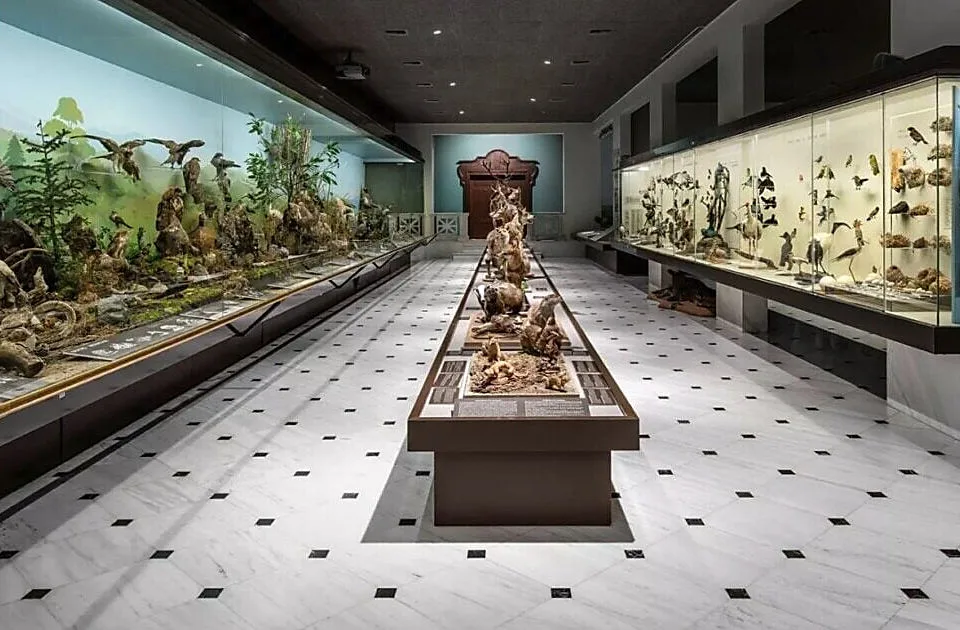
The National Museum of Natural History Goulandris offers a different side of Athens from the city’s archaeology focused museums. Founded by Angelos and Niki Goulandris in 1964, it explores the natural world through collections on plant life, animal species, geology and fossils, while also addressing contemporary environmental issues. The museum is spread across two communicating buildings: the original 19th century neoclassical mansion, home to the permanent natural history collections, and the GAIA Centre, dedicated to climate change, biodiversity, and environmental research and education.
1. The Natural History Exhibition
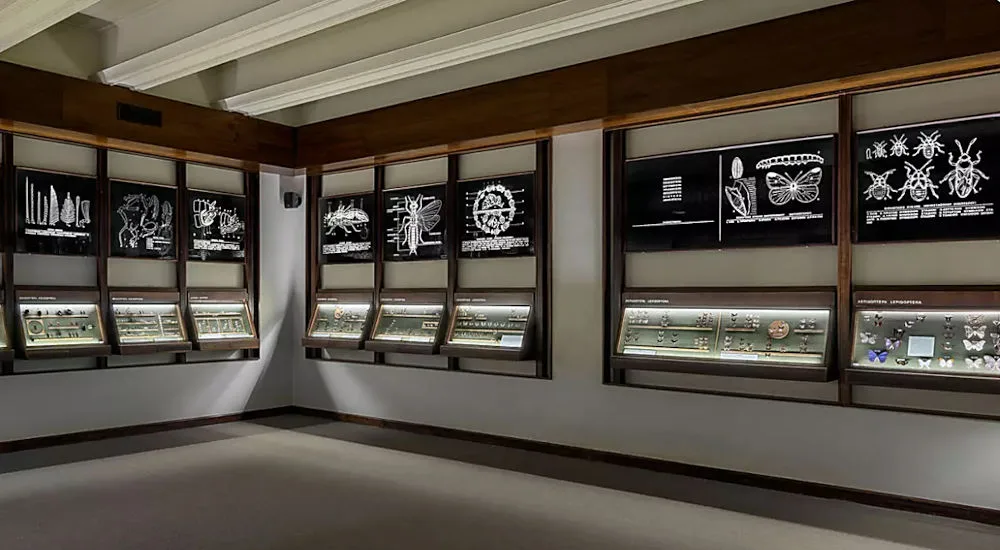
The permanent Natural History Exhibition covers zoology, botany, geology, marine biology, paleontology and more. Moving through the galleries, you get a sense not of separate disciplines placed side by side, but of one natural world gradually unfolding from room to room. Among the highlights are large animal displays that give the space an unexpected scale, including a giraffe, a rare white rhinoceros, kangaroos and koalas. In the paleontology section, one of the standout exhibits is a Triceratops skeleton replica measuring more than seven metres in length.
2. Climate Change and Biodiversity
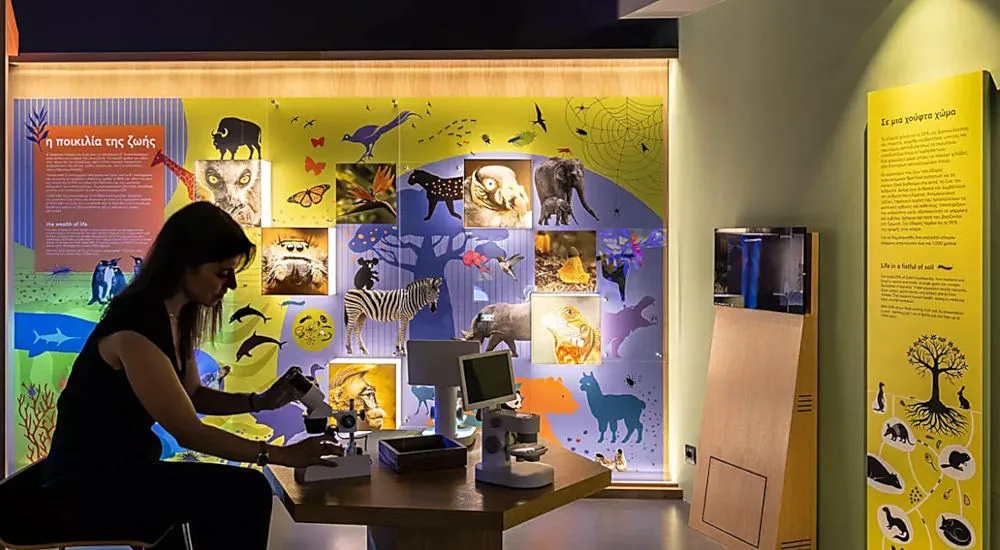
Beyond the permanent galleries, the museum turns to the present through two exhibitions that bring a more immediate focus to the visit. “Climate Change and Us” takes you through 17 interactive stations covering energy, transport, food production, water use and waste, making the connection between daily choices and global impact concrete rather than abstract. “Biodiversity. Everything is connected” expands that idea further, using holograms, panoramic projections and interactive touch displays to show how closely living systems depend on one another. The GAIA Centre also houses the Geosphere, a five metre hemispherical dome that projects the rotating planet using 225.000 high resolution images, tracing its geological evolution from 4.6 billion years ago to the present. The Digital Earthquake installation takes a different approach: a VR chair lets you experience a simulated earthquake, which tends to stay with you longer than any diagram would.
Planning a visit to the National Museum of Natural History Goulandris?
Book a private transfer from your hotel and arrive without the stress of Athens traffic.
3. The Restaurant — Enjoy the Garden
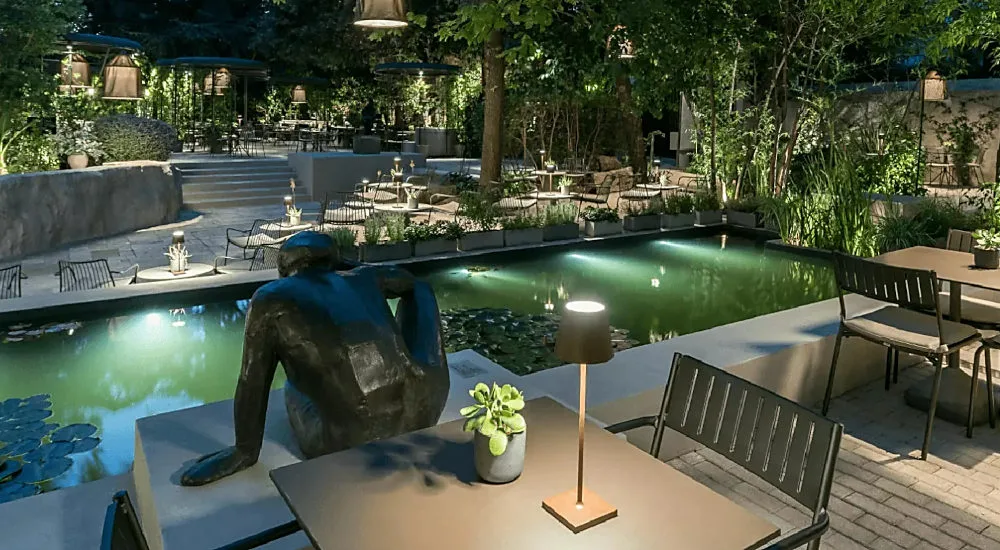
When you need a break, the museum has a good one. NATU Restaurant, set in the museum’s garden, serves Mediterranean food among laurels, myrtles, pomegranates and a Cedar of Lebanon that shades the outdoor tables. A lake with water lilies sits alongside. It works well for a coffee, lunch or an early dinner, and the kitchen stays open until 2 in the morning.
4. Before You Leave
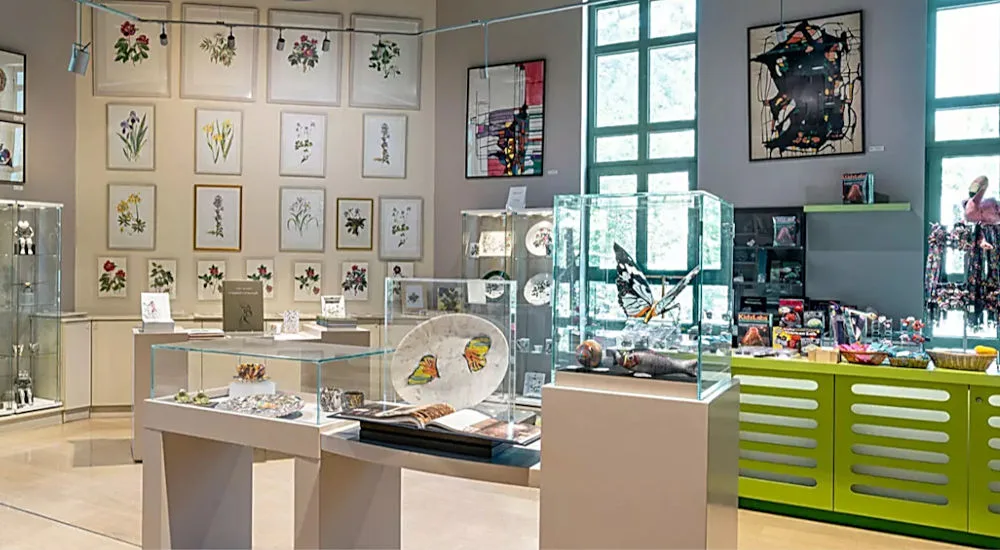
Before leaving, the museum shop is worth a look. It carries a well chosen range of items that reflect the museum’s world, from jewellery, porcelain and silk scarves to minerals, books, children’s items and pieces by Greek designers.
Getting There
The museum is in Kifissia and operates across two buildings: the Natural History Museum at Levidou 13 and the GAIA Centre at 100 Othonos Street. General admission is €12 and includes the permanent exhibitions. Some dome screenings and special experiences may require a separate ticket, so it is worth checking the latest visitor information before you go. Kifissia is around 14.5 kilometres from central Athens, and a private transfer makes the journey easy and flexible.
Thinking of Visiting the National Museum of Natural History Goulandris?
The museum has a way of keeping you longer than planned. Arriving by private transfer means you start the day without the stress of Athens traffic and leave when you are ready, not when the timetable decides.
Book your transfer here.
