

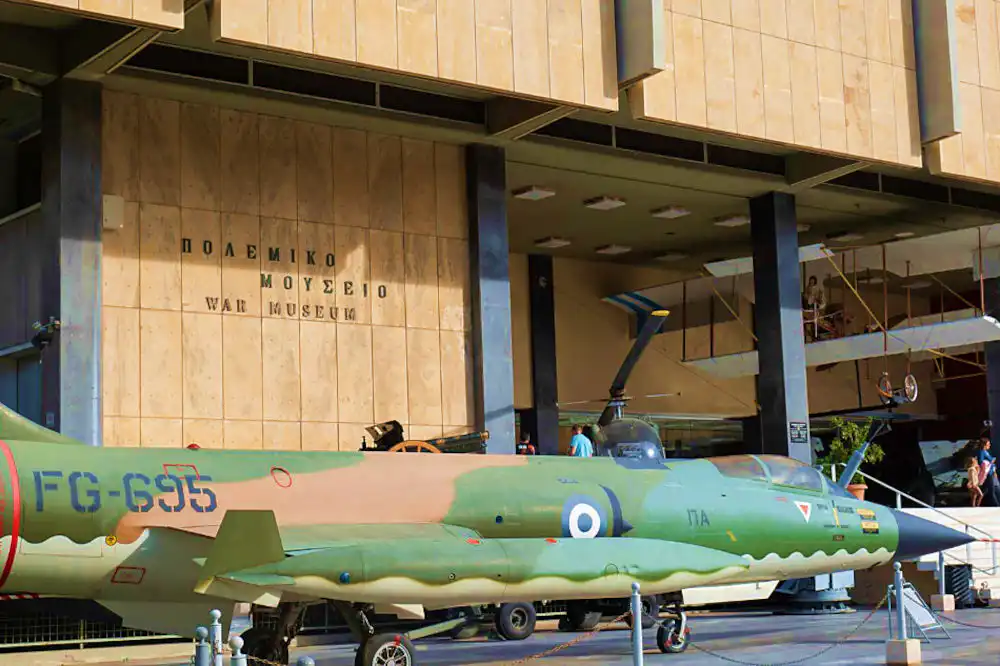
The Athens War Museum in Kolonaki offers something different from the archaeology focused museums nearby. Three thousand years of military history across four levels, from obsidian tools and Corinthian helmets to the Cyprus crisis of 1974. Inaugurated in July 1975 to preserve national memory and present the military history of Hellenism, the museum collects, preserves and displays war relics, memorabilia, weapons, uniforms, manuscripts, paintings, photographs, personal items and works of art connected to Greek military history.
Spread across four levels, the permanent exhibition follows Greek military history from antiquity to the present day. The visit moves from prehistoric tools, ancient helmets and Alexander the Great to Byzantium, the Greek Revolution of 1821, the formation of the modern Greek state, the Balkan Wars, World War I, Asia Minor, World War II, the Resistance, Korea and Cyprus.
1. The Permanent Exhibition
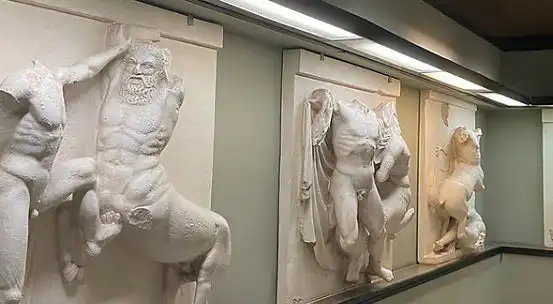
The route starts with prehistory and the early civilizations of Greece: the Cycladic, Minoan and Mycenaean worlds among them.
Obsidian tools, bronze weapons, replicas of ancient tools and copies of sculptures open the chronological route. The exhibition then moves into Archaic and Classical Antiquity, where authentic Corinthian helmets, an ancient ship anchor, ship models and sculpture casts help recreate the military world of ancient Greece.
2. Alexander the Great and the Ancient World
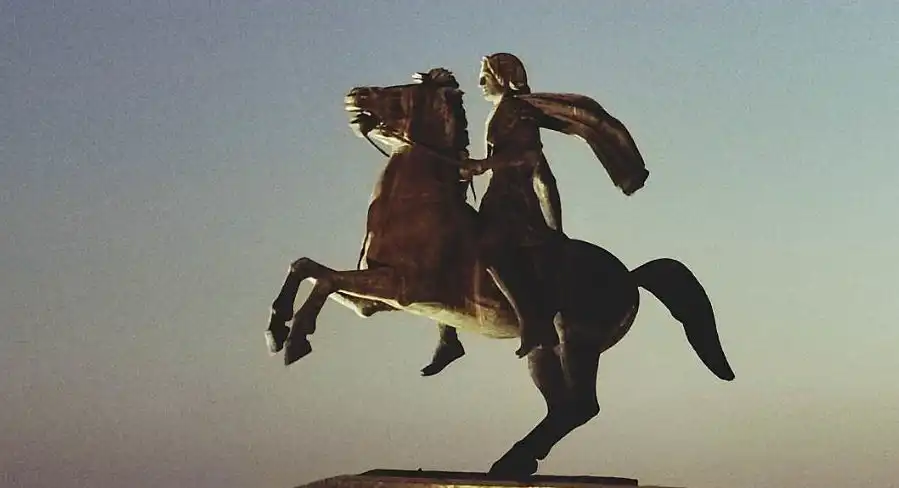
One of the museum’s rooms is dedicated to Alexander the Great, one of history’s most consequential commanders. His campaign began in Pella, reached the Indus River, and reshaped the ancient world. Interactive screens let you follow the route of his army, while models of weapons and siege mechanisms show the military technology behind the campaign.
3. Byzantium, Frankish Rule and Ottoman Rule
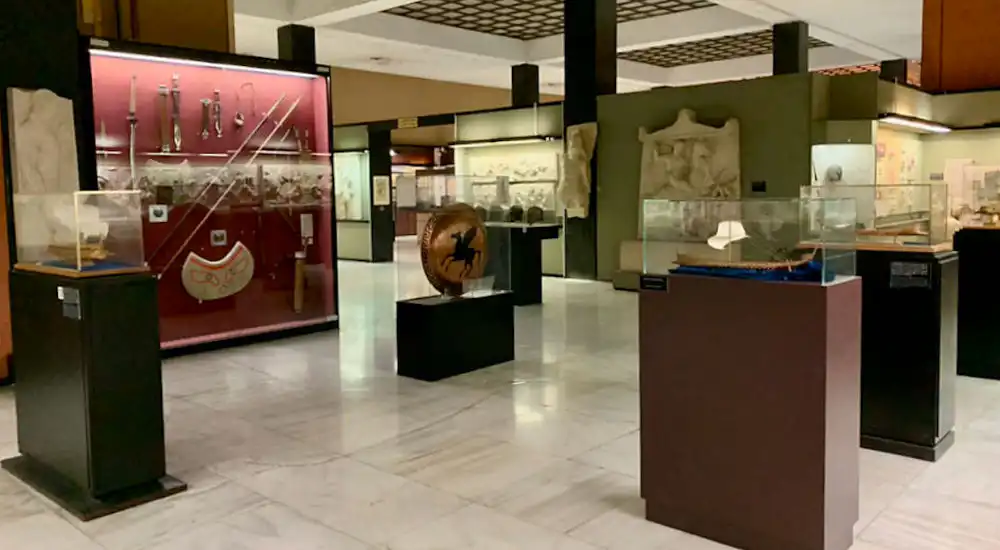
The exhibition continues with Byzantium, where models of siege engines, the Theodosian Walls, the Byzantine warship known as the Dromon and equipment connected to liquid fire present a different chapter of Greek military history.
The Frankish and Ottoman periods follow. After the fall of Constantinople to the Crusaders in 1204, Frankish rule began. The Ottoman conquest of 1453 opened another long chapter.
Engravings, lithographs, paintings, maps and weapons help present these centuries and the people who kept the idea of liberation alive. The original copy of the “Charter” of Rigas Feraios is the standout exhibit in this section, a direct link to the ideas that drove the Greek Revolution.
Planning a visit to the Athens War Museum?
Book a private transfer from your hotel and arrive without the stress of Athens traffic.
4. The Greek Revolution of 1821
The Greek Revolution of 1821 is one of the central parts of the Athens War Museum. A digital exhibition titled Journey to Liberty covers the Revolution in the Peloponnese, with the siege of Tripoli and the naval battle of Navarino among its focal points.
Virtual reality devices let you step inside key moments of the struggle.
Other rooms continue the story through works of art, manuscripts and weapons. Battles, naval battles, heroic moments and disasters are shown alongside the art, manuscripts and writing they inspired among Philhellenes across Europe.
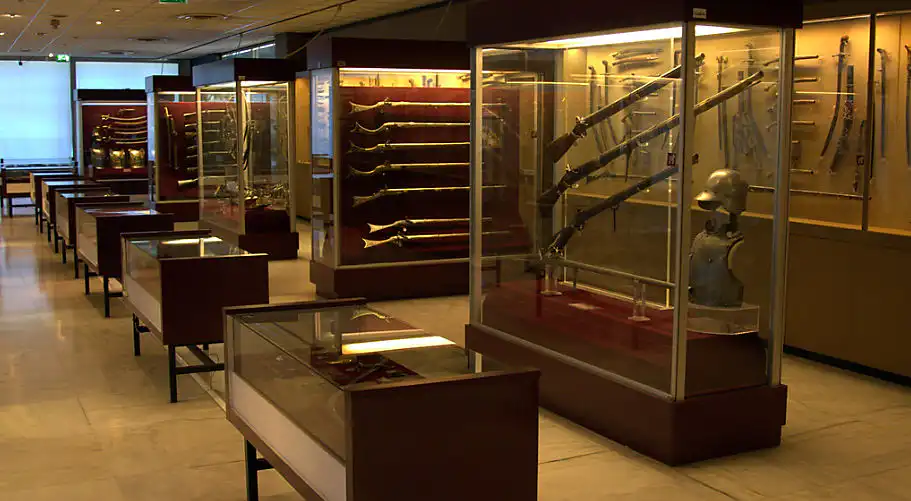
5. The New Greek State, the Macedonian Struggle and the Balkan Wars
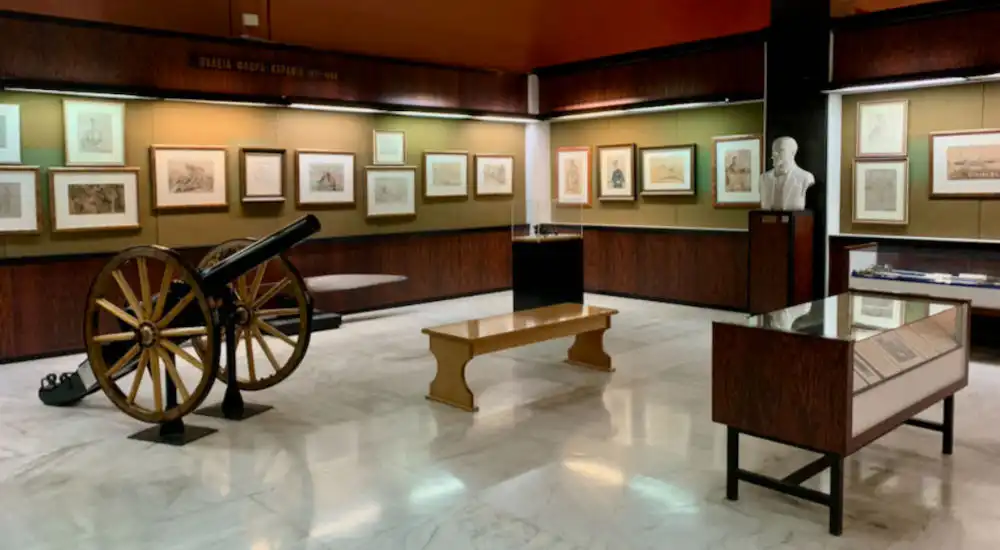
After the Revolution, the museum follows the creation of the modern Greek state from 1828 to 1911. Weapons, paintings, lithographs, sculptures and relics present the effort of the Greeks to organize their newly established state and later expand its borders. The revolutions in Crete, Epirus and Thessaly are part of this story and reflect the wider effort to liberate Greek populations still living under Ottoman rule.
The Macedonian Struggle of 1904 to 1908 focused on protecting Greek populations in Macedonia from Bulgarian expansionist ambitions. The Balkan Wars continue this story through the battles and naval engagements that led to the liberation of Macedonia, Crete, Ioannina and the islands of the North Aegean.
The work of Thalia Flora Karavia stands apart. She recorded the Balkan Wars from the front line as an envoy of the Alexandrian newspaper Ephimeris, and her drawings present these events through the eyes of a woman who was also active in the women’s movement of her time.
6. World War I, Asia Minor and the Greco Italian War
The 20th century galleries carry a heavier atmosphere. Greece entered World War I on the side of the Entente and emerged victorious. Weapons, photographs, uniforms, relics and works of art present this period and its military history.
The Asia Minor Campaign of 1919 to 1922 followed. Greek forces landed after the Paris Peace Conference, won early ground, then faced reversal and eventual defeat, which ended with the violent expulsion of Greeks from Asia Minor.
The rooms dedicated to the Greco-Italian War of 1940 to 1941 carry real weight. On 28 October 1940, Greece refused to submit to fascist Italy. Weapons, relics, photographs, paintings and figures convey the enthusiasm of mobilization, the hardships of war and the joy of victory in the mountains of Pindos.
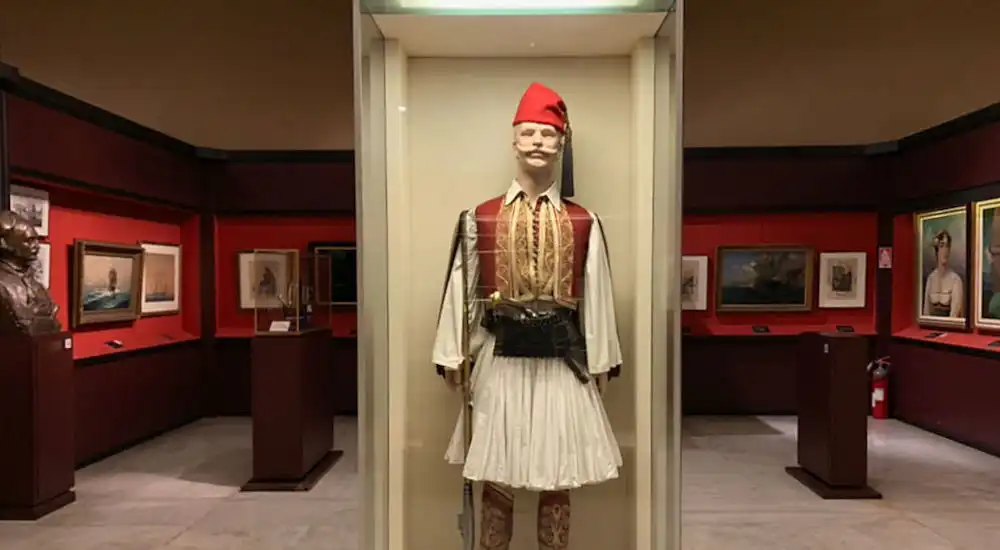
7. The German Invasion, the Battle of the Forts and the Battle of Crete
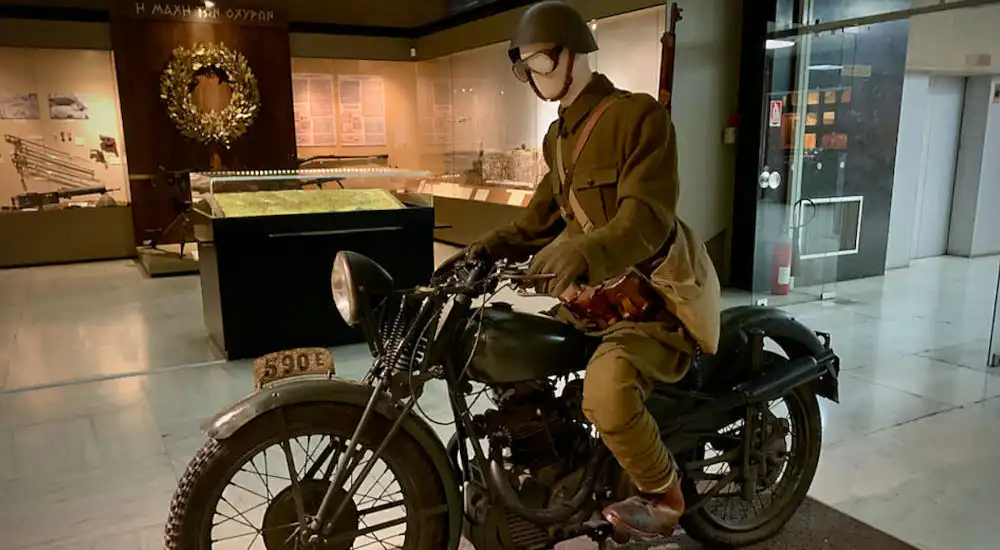
The story continues with the German invasion of Greece on April 6, 1941. Although Greek forces defended themselves strongly, they could not stop the German advance. The Greek army defended the fortifications on the border with Bulgaria, but German troops managed to bypass them and reach Athens.
The Battle of the Forts and the Battle of Crete are presented through weapons, uniforms, photographs, cartoons, posters, paintings and personal items. These exhibits cover the military events and the atmosphere around them: the hardship, the resistance and the wider impact on Greek society.
The Battle of Crete in May 1941 was the last major battle fought for the defence of Greek territory during this period.
8. The Ground Floor and the Saroglou Collection
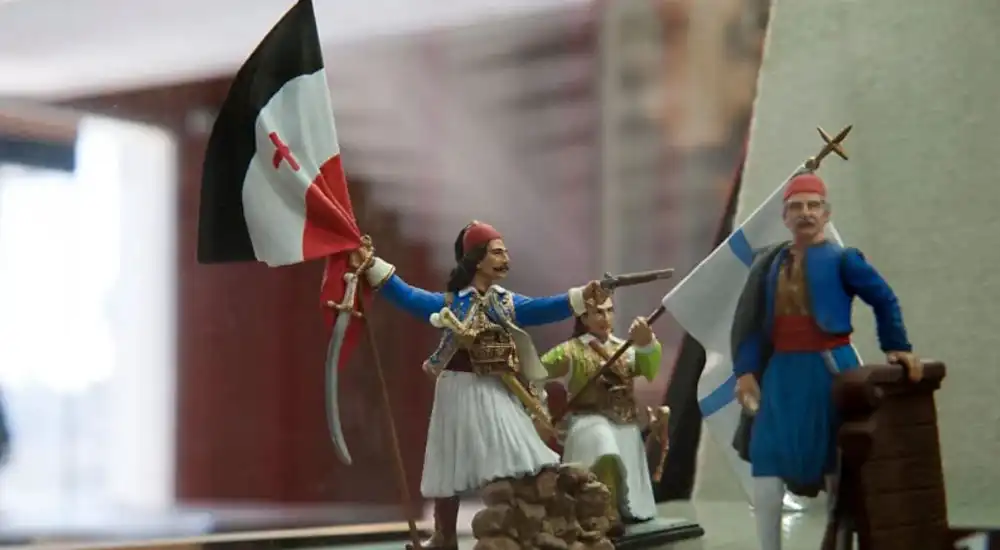
On the ground floor, visitors can see uniforms from various periods, portraits of heroes of the Greek Revolution of 1821 and dioramas dedicated to the Exodus of Messolonghi and the Greek Expeditionary Corps in Korea.
The Peter Z. Saroglou Collection, on the same level, brings together rare weapons from different eras and parts of the world. Japanese samurai swords (katana), Persian armour, firearms and edged weapons from Europe, Asia and Africa sit alongside Greek pieces from the Revolution. Many carry intricate decoration, which sets them apart from standard military exhibits.
The museum also has a library and reading room with thousands of books and publications, with a special focus on Greek military history. The war museum library is open daily from 09:00 to 13:30, except Saturdays, Sundays and public holidays.
9. The Open Air Display
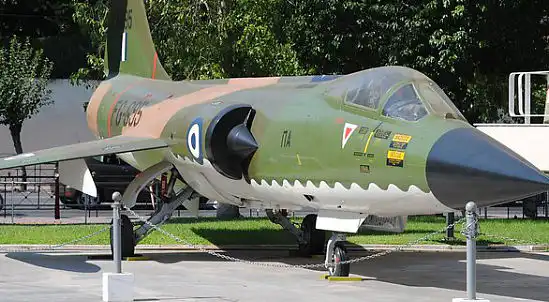
Outside, aircraft and weapons from different periods are displayed in the museum grounds. The aircraft include a Spitfire from World War II, an F-104G Starfighter, an OH-13S Sioux observation helicopter and a Farmand 1912, one of the first aircraft used by the Greek military.
After the enclosed galleries, the outdoor exhibits give the collection a different scale. Worth a slow walk before leaving.
10. Coffee Before You Go
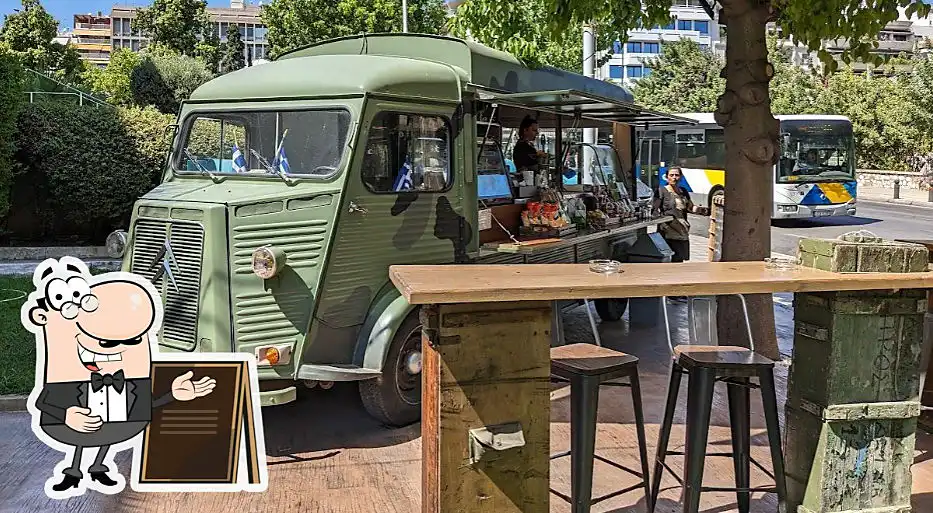
Before you leave, you can stop at the War Museum Café, located inside the museum grounds. The café opened in a renovated vintage Citroën van and serves coffee, juices, sandwiches and pastries. It is a good place for a short break before heading back out.
11. Before You Leave
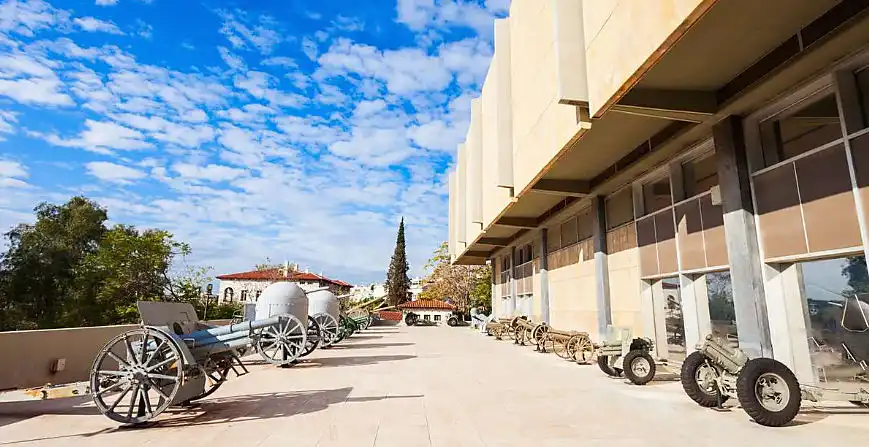
It is worth taking one final look at the outdoor exhibits and checking whether any temporary exhibitions are taking place. The Athens War Museum is not only a permanent exhibition space. It also supports research, publications, study, conservation, training and the organization of temporary exhibitions in Greece and abroad.
Useful Informatione
Opening hours: summer (1 April – 31 October) 09:00 – 19:00 daily, winter (1 November – 31 March) 09:00 – 17:00 daily. On Saturdays the museum stays open until 22:00 year round.
The Easiest Way to Arrive
The Athens War Museum is on Rizari in Kolonaki, easy to combine with other cultural stops in the city. The surrounding streets can be busy and a private transfer gets you directly to the entrance without dealing with traffic or parking. If you have more time, the Byzantine and Christian Museum is directly next door, in the Villa Ilissia, and holds one of the most significant collections of Byzantine art in the world, with icons, sculpture and manuscripts. The two together fill a day without difficulty.
Visit the Athens War Museum Without Stress
The Athens War Museum has a way of keeping you longer than expected.
Arriving by private transfer means you start the visit without the stress of Athens traffic and leave when you are ready, not when the timetable decides.
Book your transfer here.
